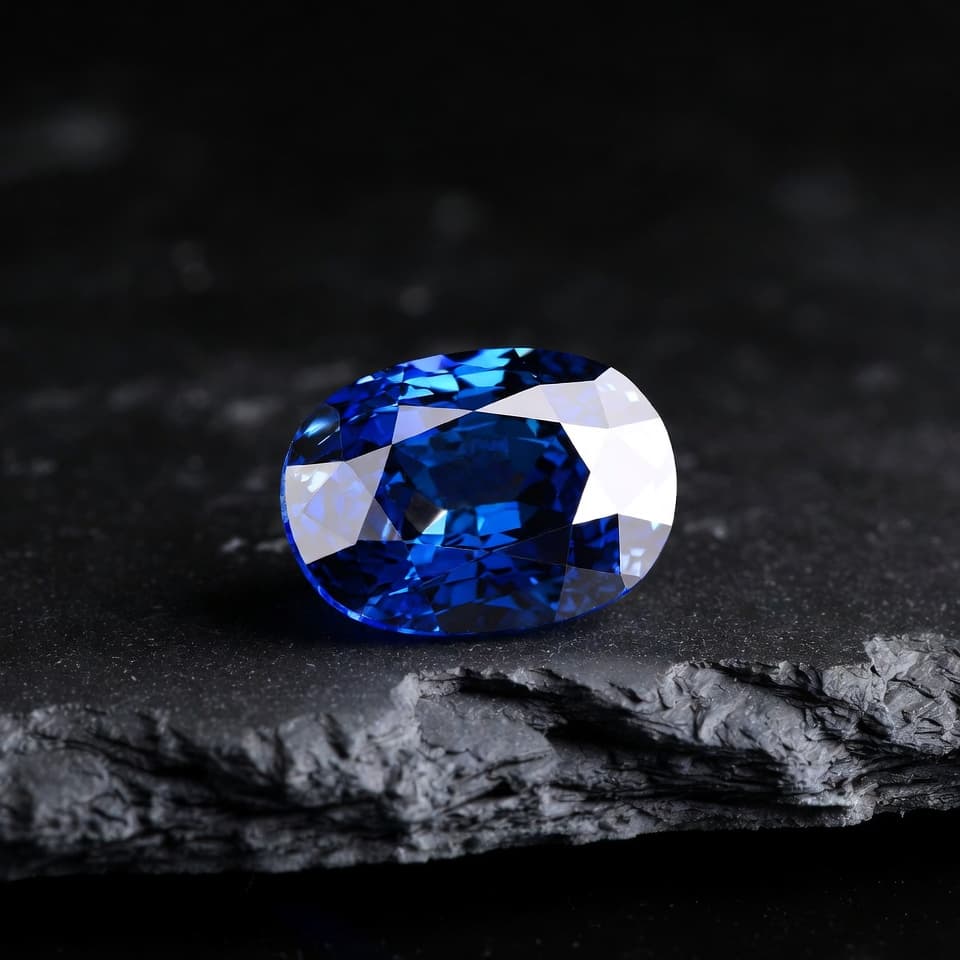
Sapphire is corundum, a crystalline form of aluminium oxide, and it sits at 9 on the Mohs scale of scratch hardness. Only diamond, at 10, is harder among natural gemstones. For a stone worn on the hand every day, that single property does more work than any other.
Hardness is not the whole story. It describes resistance to scratching, and says nothing about resistance to chipping under a knock. Understanding the difference is what separates a ring that survives thirty years from one that needs a repair every second year.
What the Mohs scale actually measures
The Mohs scale ranks minerals by which one scratches which. It is ordinal, not linear. The step from 9 to 10 is far larger than the step from 8 to 9, so diamond is not simply one increment harder than sapphire. What the scale tells you reliably is the direction of damage: a harder material will mark a softer one, and never the reverse.
Why 9 is the practical threshold
Ordinary household dust contains a large proportion of quartz, which sits at 7. This is the reason gemstones below 7 lose their polish on a ring worn daily: they are being abraded by the dust in the air and on every surface the hand touches. At 9, sapphire is comfortably above that threshold. Its polish survives normal wear in a way that softer stones cannot.
- Diamond, 10, the only natural gem that will scratch a sapphire.
- Sapphire and ruby, both corundum, 9.
- Topaz 8, spinel 8, and quartz 7, the point below which everyday dust begins to dull a stone.
- Tanzanite 6 to 7 and opal 5 to 6, both better suited to earrings and pendants than to rings worn daily.
Hardness is not toughness
Toughness is a separate property: resistance to chipping and fracture under impact. A stone can be very hard and still chip if struck on an exposed edge. Corundum has no cleavage, meaning no plane along which it splits readily, which gives it good toughness. It can still exhibit parting where the crystal has structural weakness, and a sharp knock on an unprotected corner can chip any faceted stone regardless of hardness.
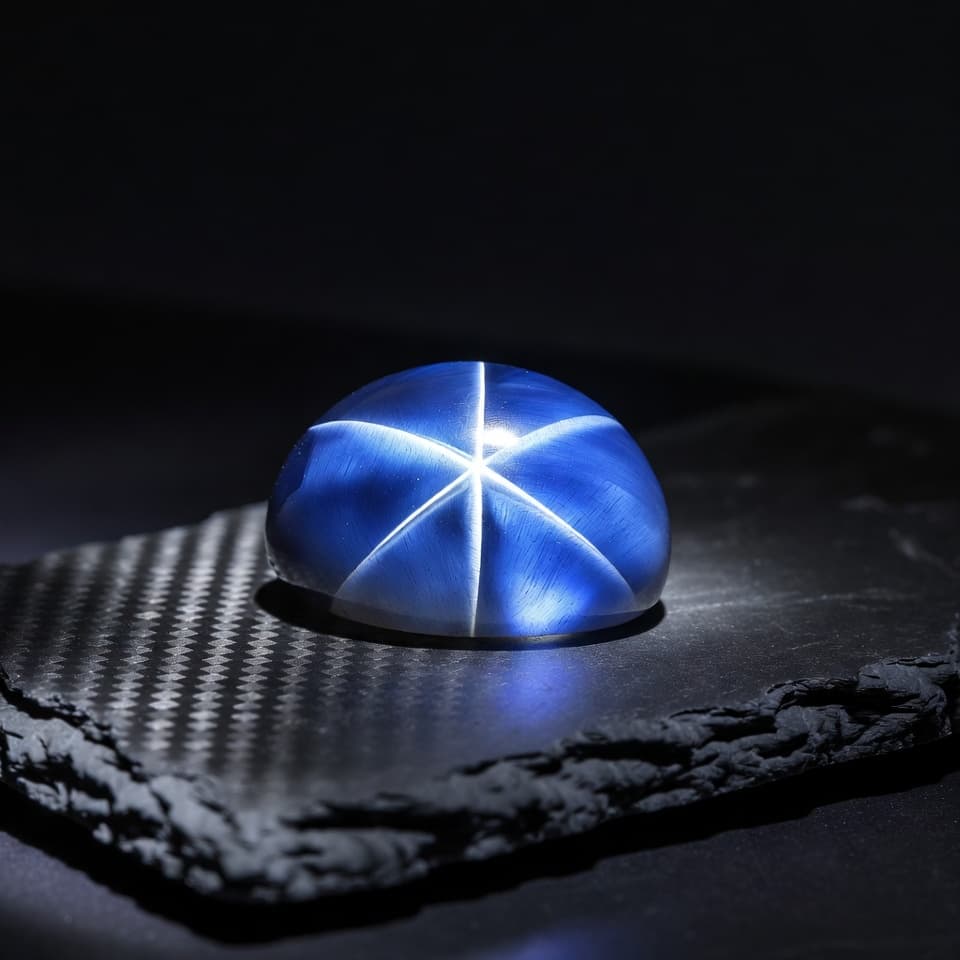
Hardness protects the polish. The setting protects the edges. A daily-wear ring needs both.
What this means when you choose a setting
Because sapphire resists scratching but can still chip, the setting does the work that hardness cannot. A bezel encircles the girdle in metal and shields the most vulnerable edge. Prongs give more light and more exposure. Cuts with sharp corners, such as princess and some emerald cuts, place more material at risk than rounded outlines like oval, cushion and round.
What still damages a sapphire
- Impact on an exposed corner, which is a chipping risk rather than a scratching one.
- Contact with another sapphire or a diamond in a shared jewellery box, the only everyday materials hard enough to scratch it.
- Heat and thermal shock, which can extend an existing fracture that reaches the surface.
- Chemical attack on the metal rather than the stone, which loosens the setting and leads to loss.
None of these is a reason to avoid wearing a sapphire. They are the reasons to store it separately, to have the setting checked periodically, and to remove it for heavy manual work.
Questions fréquentes
- How hard is a sapphire?
- Sapphire is 9 on the Mohs scale of scratch hardness. It is the hardest natural gemstone after diamond, which is 10. Sapphire and ruby are both corundum and share the same hardness.
- Can a sapphire be scratched?
- Only by another sapphire, a ruby, or a diamond in everyday circumstances. Nothing softer will mark it. This is why sapphire jewellery should be stored so pieces do not rub against one another.
- Can a sapphire chip or break?
- Yes. Hardness resists scratching, not impact. Corundum has no cleavage, which gives it good toughness, but a sharp knock on an exposed corner can still chip a faceted stone. A protective setting matters more than hardness here.
- Is a sapphire suitable for an engagement ring worn every day?
- Yes. At Mohs 9 with no cleavage, sapphire is among the few coloured stones genuinely suited to daily wear. Along with ruby, it is the standard recommendation for a coloured centre stone in a ring.
- Is sapphire harder than diamond?
- No. Diamond is 10 and sapphire is 9, and because the Mohs scale is ordinal rather than linear, the real difference between them is considerably larger than one step suggests.
Sources
- GIA, Sapphire Description and Quality Factors
- Mohs scale of mineral hardness, standard gemmological reference
- Corundum species data, hardness 9 and absence of cleavage