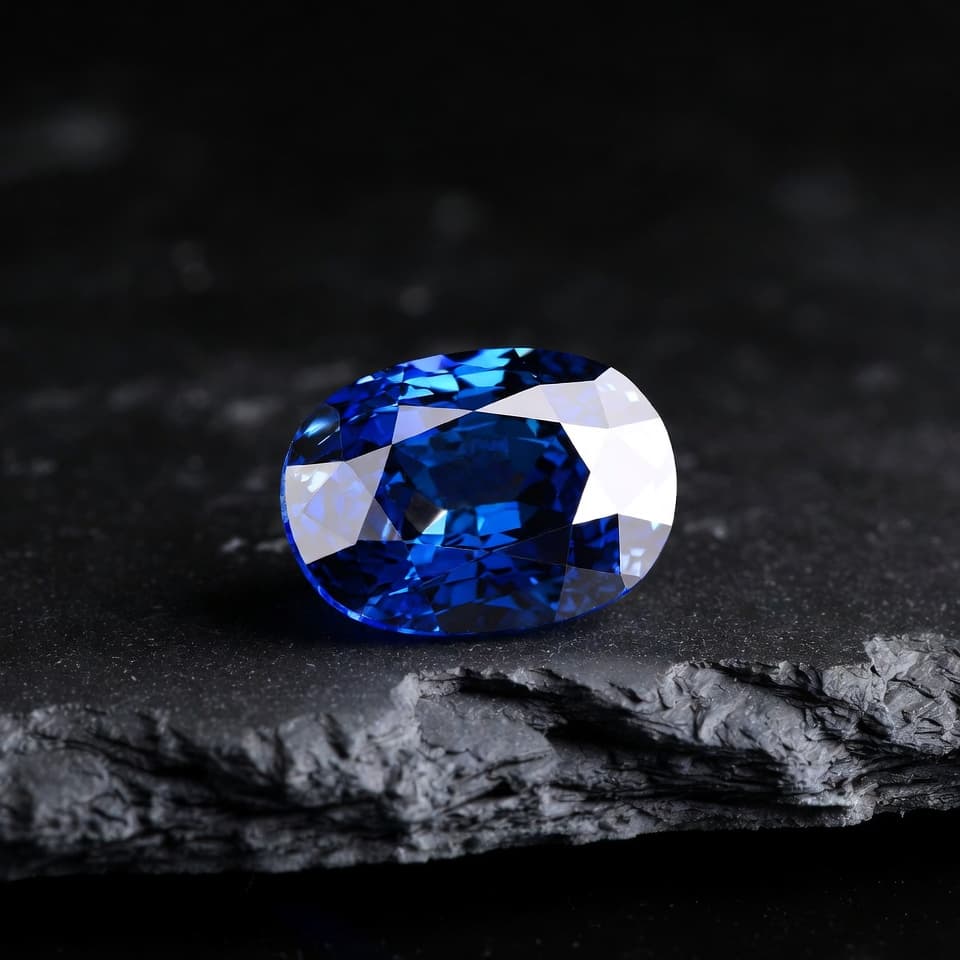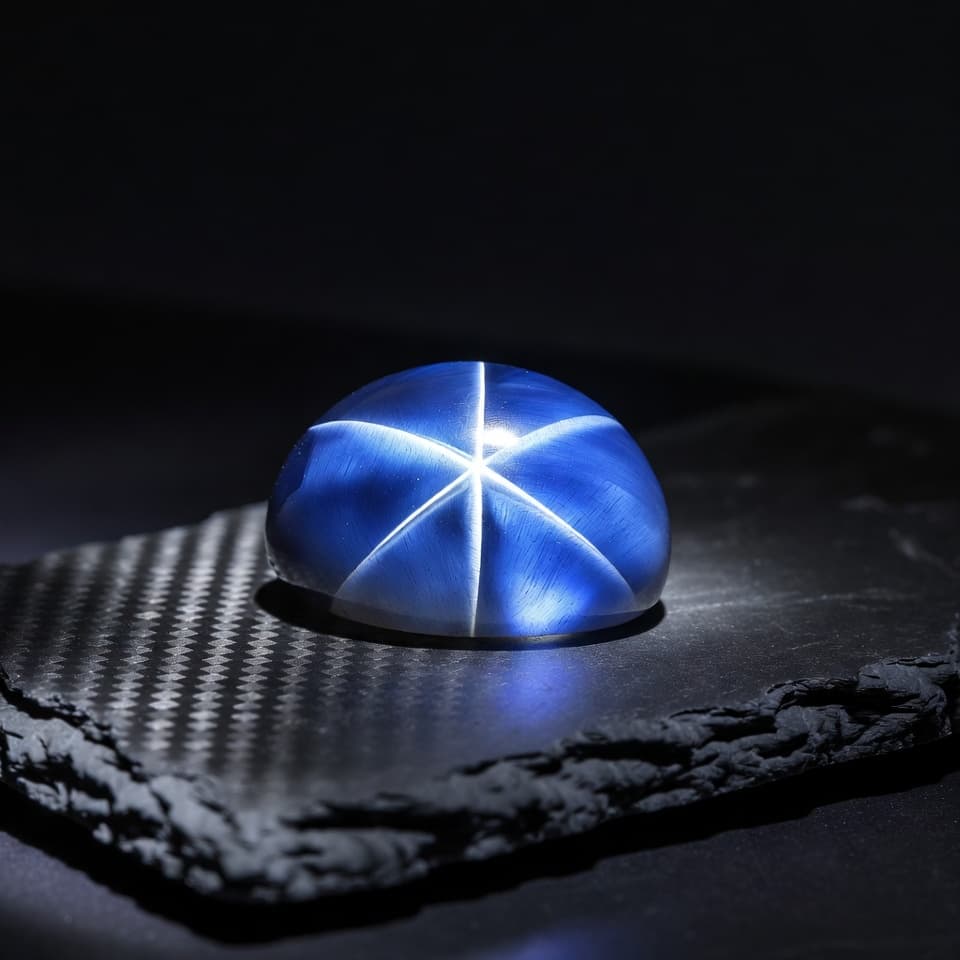
The metal and the setting are not decoration around a sapphire, they are what protects it and what determines how it will age. Platinum and 18k gold behave differently under wear, and the difference is worth understanding before the piece is made.
Every choice here is a trade between light, protection and maintenance. There is no single correct answer, only the answer that matches how the piece will actually be worn.
What the karat mark means
Karat states the proportion of pure gold in an alloy. 18k is 75 per cent gold, marked 750. 14k is 58.5 per cent, marked 585. Pure gold at 24k is too soft to hold a stone securely, so all jewellery gold is alloyed. The remaining quarter of an 18k alloy is what produces the colour: copper for rose, silver and palladium or nickel for white, a balance of silver and copper for yellow.
Platinum against 18k gold
Platinum in jewellery is typically 950, meaning 95 per cent pure, a far higher precious-metal content than any gold alloy. It is noticeably denser, so a platinum piece feels heavier than the identical piece in gold. Its most useful property is how it responds to damage: when platinum is scratched the metal is displaced rather than lost, so it develops a soft patina over the years and can be repolished repeatedly without meaningful thinning. Gold sheds a little metal each time it is scratched or polished.
Platinum is chosen for prongs more often than for any other part of a ring, because prongs are where metal loss matters most.
White gold and rhodium
White gold is a yellow metal alloyed toward white and then, almost always, plated with rhodium to give the bright cool finish buyers expect. That plating is a surface layer and it wears. Depending on how the piece is worn, replating is typically needed periodically to maintain the original colour. This is normal maintenance rather than a defect, but it is a recurring commitment that platinum does not carry.
Setting styles and what they do

- Solitaire and prong: maximum light into the stone, maximum visibility, edges left exposed.
- Bezel: a rim of metal around the girdle. The most protective option, and the one that shows the least of the stone's outline.
- Halo: small stones encircling the centre, adding apparent size and sparkle, and adding settings to be checked.
- Three stone: a centre flanked by two, which reads as wider on the hand.
- Pave and channel: many small stones set into the metal. Channel protects them within walls; pave holds them with tiny beads and needs more attention over time.
- Tension: the stone held by the spring pressure of the shank. Visually striking, and very difficult to resize.
Matching the setting to the stone
Cuts with sharp corners benefit from metal at those corners, where the chipping risk concentrates. Rounded outlines are more forgiving. A stone with a fracture reaching the surface should be protected rather than exposed, and should not be set in a design that will require heat near the stone for future repairs.
Mixing metals
A yellow gold shank with a white setting head is a long-standing combination: the warm metal flatters the hand while the white metal around a blue stone keeps the colour clean and avoids casting a yellow reflection into it. This is a deliberate technique rather than a compromise.
Questions worth asking before it is made
- Which metal are the prongs, as distinct from the shank?
- If white gold, how often will replating be needed for this style of wear?
- Can this design be resized, and by how much?
- How many small stones does the design carry, and how should they be checked?
Часто задаваемые вопросы
- Is platinum better than 18k gold for a sapphire ring?
- Neither is better outright. Platinum is 95 per cent pure, denser, and displaces rather than loses metal when scratched, so it repolishes well and needs no plating. 18k gold is 75 per cent gold, lighter, available in more colours, and white gold requires periodic rhodium replating.
- What does 18k mean?
- 18k is 75 per cent pure gold, marked 750. The remaining 25 per cent is alloy, and that alloy determines the colour: copper for rose, palladium or nickel and silver for white.
- Why does white gold need replating?
- White gold is a yellow metal alloyed toward white and then plated with rhodium for a bright cool finish. That plating is a surface layer that wears with use, so it needs renewing periodically to keep the original colour.
- Which setting protects a sapphire best?
- A bezel. It encircles the girdle in metal and shields the edge, which is where chipping starts. Prongs show more of the stone and admit more light, but leave the edges exposed.
- Can you mix metals in one piece?
- Yes, and it is often deliberate. A yellow shank with a white setting head is common, because white metal around a blue stone avoids casting a warm reflection into the colour.
Источники
- Karat and fineness standards: 18k as 750 parts per thousand, 14k as 585
- Platinum jewellery alloys, commonly 950 fineness
- Standard trade practice on rhodium plating of white gold